
College Admissions & Application Support
One-on-one college admissions guidance for high school seniors throughout San Francisco and the Bay Area, plus online support nationwide.
The college application process often feels overwhelming. It involves hundreds of decisions, deadlines, and details. Students are expected to choose schools, evaluate programs, write personal essays, manage applications, and make important decisions about their future, while balancing a challenging semester of high school.
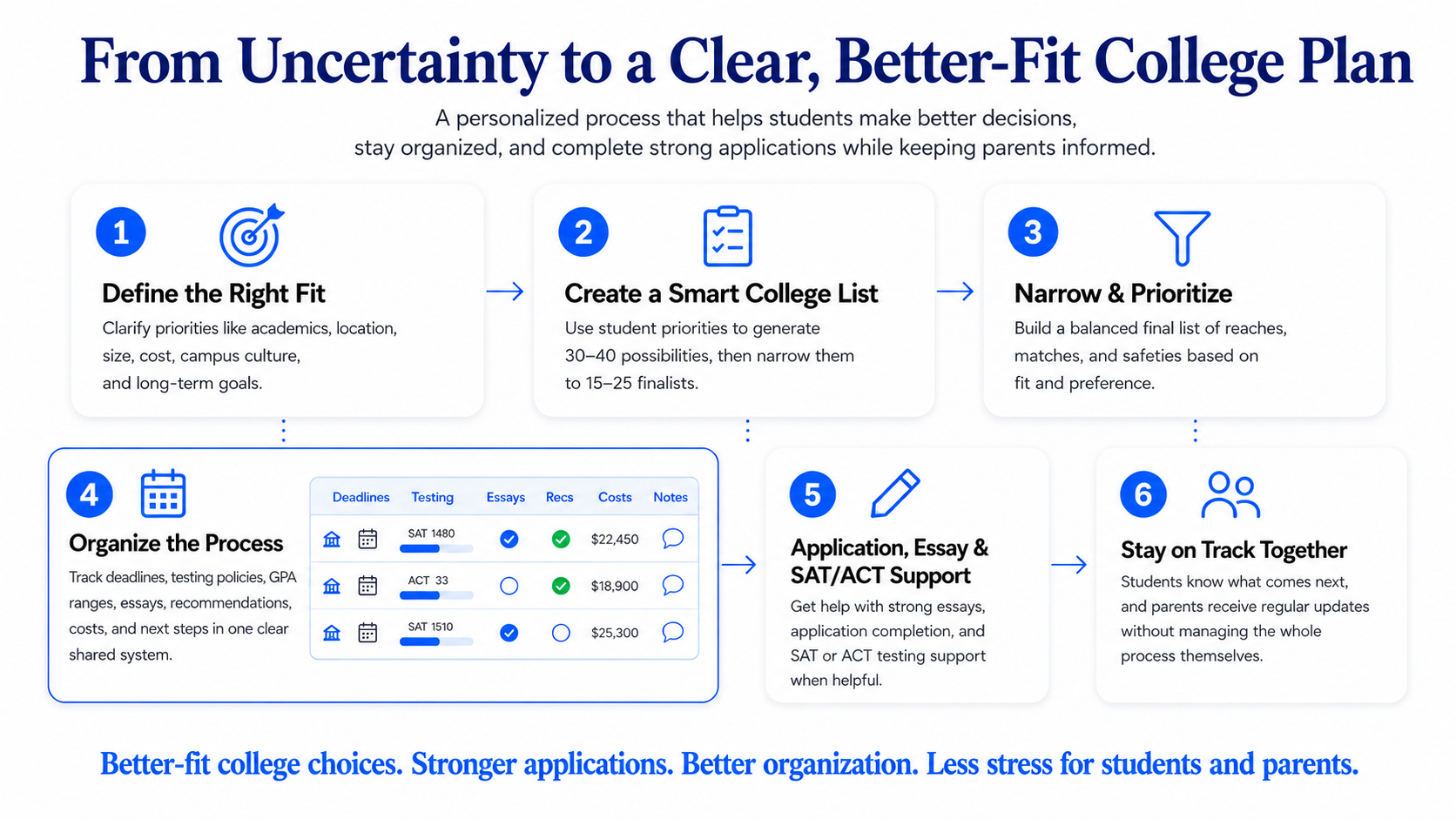
I help students turn that uncertainty into a clear, manageable plan. Together, we identify what matters most in their college experience, research strong options, build a balanced school list, organize application requirements, and complete each step with confidence.
Parents stay informed throughout the process, while students receive the structure and support they need to take ownership of their decisions.

Who This Service Is For
This service is a good fit for:
High school seniors who feel uncertain about where to apply
Students who have interests but are unsure which colleges fit them best
Families overwhelmed by conflicting information, deadlines, and application requirements
Students who need help building a balanced list of reach, match, and likely schools
Students who want support with essays, applications, portfolios, or supplemental materials
Families who want a knowledgeable guide without surrendering control of the process
Parents who want to stay informed without having to manage every task themselves
Students who may need SAT or ACT support alongside their applications
“Dan did an awesome job helping our son with college apps. Very no-nonsense, on-demand support. Highly recommend!”
Common Challenges
Feeling overwhelmed by the number of colleges and possible paths
Choosing schools based primarily on name recognition or rankings
Difficulty identifying the environment where the student will actually thrive
Building a list that is either too ambitious, too cautious, or too large
Missing application requirements or important deadlines
Confusion about test-optional policies and whether to take the SAT or ACT
Procrastinating on essays, portfolios, and supplemental questions
Disagreements between students and parents about priorities
Losing track of tasks spread across multiple application platforms
Feeling anxious because no one has created a clear overall plan
How I Help
1. Discovering What the Student Actually Wants
Before researching individual schools, we discuss the kind of experience the student wants to have.
Topics may include:
Large university or smaller college
City, college town, suburban, or rural setting
Distance from home
Cost and financial priorities
Campus culture and social life
Athletics, clubs, outdoor activities, and creative opportunities
Academic interests and possible majors
Internships, study abroad, and career opportunities
Weather, transportation, and access to surrounding areas
Students often begin with only a vague idea of what they want. Talking through these questions helps them become more thoughtful and confident about their options.
2. Building a Personalized College List
We begin with a broad list, often around 20 to 30 possible schools. We then research and discuss each option before narrowing the list to approximately 10 to 20 serious applications.
The final list includes an appropriate combination of:
Reach schools
Match schools
Likely schools
The goal is not to apply to the largest possible number of colleges. It is to build a balanced list of schools the student would genuinely be excited to attend.
3. Researching and Comparing Schools
I help students evaluate colleges using the factors that matter most to them, not rankings alone.
Depending on the student, we may compare:
Strength of specific majors or programs
Acceptance rates and typical admitted-student profiles
Average GPA and testing expectations
Tuition, housing, financial aid, and estimated cost
Campus size and student population
Internship and career opportunities
Surrounding city or college town
Campus culture and student experiences
Application platforms and requirements
Essays, portfolios, interviews, or recommendation letters
Early action, early decision, priority, and regular deadlines
I use AI to organize and accelerate research when it is genuinely helpful, but important information is checked against trusted sources such as official college websites, admissions pages, and reputable college data.
4. Creating a Clear Application System
We organize the student’s research and decisions in a shared spreadsheet.
The spreadsheet may include:
The student’s personal ranking of each school
Important strengths and concerns
Admissions requirements
Testing policies
Average GPA and acceptance information
Application and portfolio deadlines
Essay and supplemental requirements
Cost and financial-aid information
Application status
Important links and next steps
We also create a timeline for essays, recommendations, testing, applications, and other requirements. Instead of holding the entire process in their head, the student can see exactly what has been completed and what comes next.
5. Completing Strong Applications
As needed, I help students with:
Common App organization
Personal statement brainstorming
Supplemental essays
Revising and strengthening drafts
Activity descriptions
Creative statements and portfolios
Understanding application questions
Completing applications together over Zoom
Final review before submission
The student’s ideas, experiences, and voice remain their own. My role is to help them think more deeply, communicate clearly, and present the strongest authentic version of themselves.
That last paragraph is excellent for ethical positioning and parent trust.
6. Coordinating Testing and Academic Support
Some students decide that taking or retaking the SAT or ACT could strengthen their options. Because I also provide SAT and ACT tutoring, testing can be incorporated into the same overall plan.
Students who need help balancing applications with schoolwork can also receive academic and executive functioning support throughout senior year.
We organize the student’s research and decisions in a shared spreadsheet.
The spreadsheet may include:
The student’s personal ranking of each school
Important strengths and concerns
Admissions requirements
Testing policies
Average GPA and acceptance information
Application and portfolio deadlines
Essay and supplemental requirements
Cost and financial-aid information
Application status
Important links and next steps
We also create a timeline for essays, recommendations, testing, applications, and other requirements. Instead of holding the entire process in their head, the student can see exactly what has been completed and what comes next.
“Helped so much with college admissions and finalizing my essay and other parts of the application. Would definitely recommend!”
Parents Stay Informed Without Having to Manage Everything
College applications often create tension because parents feel responsible for making sure everything gets done, while students want greater independence.
I help create a healthier balance.
Parents receive access to the shared planning documents and a brief update after each session. Updates explain:
What we worked on
What progress was made
Where the student is in the overall process
What the student needs to complete next
Whether any parent input or action is needed
This allows parents to remain informed without having to repeatedly ask about essays, deadlines, or unfinished applications. Students gain ownership of the process while still receiving consistent structure and accountability.
Why College Admissions Support Matters
The college process is not difficult because students are incapable. It is difficult because it combines long-term planning, personal reflection, research, organization, writing, and high-stakes decision-making at the same time.
A thoughtful process helps students:
Make decisions based on fit rather than fear or prestige alone
Discover colleges they might otherwise overlook
Understand the differences between their options
Create a realistic and balanced application list
Complete stronger essays and applications
Stay ahead of deadlines
Feel less overwhelmed and more confident
Take greater ownership of their future
The result is not simply a completed set of applications. Students finish the process with a clearer understanding of what they want, why they want it, and how to move toward it.
Why Impactful Tutoring
Over 15 years supporting high school students and families
A personalized process built around the individual student
Practical systems that make complex decisions easier to manage
Calm, nonjudgmental guidance that helps students communicate honestly
Research that combines modern tools with trusted admissions sources
College-list development, application planning, essays, and testing available through one consistent professional
Detailed parent updates and shared planning documents
Academic, SAT, ACT, and executive functioning support available throughout senior year
Flexible online meetings that make it easy to maintain momentum
No pressure to purchase a predetermined package or follow a generic college list
Wondering if College Admissions Support Is the Right Fit?
Every student enters the college process with different goals, concerns, and levels of preparation.
During a free consultation, we will discuss where your student is in the process, what decisions still need to be made, and which areas are creating the most stress. I will explain how I can help and recommend a level of support that fits your student and family.
Whether your student needs help choosing schools, organizing the entire process, strengthening essays, or simply getting applications across the finish line, we can build a clear plan together.
College Admissions FAQs
1. When should students begin college admissions counseling?
Many students begin during the spring or summer before senior year, which provides time to research colleges, build a balanced list, consider testing, and begin essays before application deadlines become urgent. I also work with students who begin later. Even a few focused sessions can bring clarity and help a student prioritize the most important next steps.
2. How do you help students choose colleges?
We begin by discussing the student’s academic interests, preferred environment, budget, location, campus culture, activities, and long-term goals. From there, we research possible schools and compare the factors that matter most to the student. We usually begin with a broad list before narrowing it to a balanced group of reach, match, and likely schools.
3. How many colleges should a student apply to?
There is no perfect number for every student. Many students ultimately apply to approximately 10 to 15 colleges, although the right number depends on selectivity, finances, application requirements, and how confident the student feels about the list. My goal is to help students apply thoughtfully rather than adding schools simply to increase the total.
4. Do you help with college essays?
Yes. I help students brainstorm, organize, draft, and revise personal statements and supplemental essays. I ask questions that help students identify meaningful experiences and communicate them clearly while preserving their natural voice. The finished essay should sound like the student at their thoughtful best, not like it was written by an adult.
5. Can you help complete the Common App and other applications?
Yes. I help students organize their Common App, activity list, school-specific questions, and supplemental requirements. When useful, we can work through applications together over Zoom to make sure students understand each section and remain on schedule.
6. Do you help students decide whether to take the SAT or ACT?
Yes. We consider the student’s current scores, target schools, testing policies, available preparation time, and whether a stronger score is likely to improve the application. When testing makes sense, college admissions support can be combined with personalized SAT or ACT tutoring.
7. How are parents involved?
Parents receive access to shared planning documents and an update after each session. I explain what we accomplished, what the student needs to do next, and whether any parent support is needed. This keeps parents informed without requiring them to manage every conversation and deadline.
8. Can you help a student who is already behind?
Absolutely. We begin by identifying deadlines, incomplete tasks, and the applications that matter most. Then we create a realistic plan based on the available time. Starting earlier provides more options, but focused support can still make a major difference late in the process.
9. Do you guarantee admission to a particular college?
No ethical counselor can guarantee admission. Admissions decisions depend on many factors outside any counselor’s control. I help students make informed choices, submit thoughtful and complete applications, and present themselves as clearly and authentically as possible.
10. Is college admissions support offered online?
Yes. College research, planning, essay review, and application support work extremely well online. Shared documents and screen sharing allow us to research schools, update spreadsheets, review essays, and complete applications together in real time. Online sessions are available nationwide.